[mwai_chatbot id="default"]

#TechNews

Over 300 5G Sites Activated Across Pakistan

Over 300 5G Sites Activated Across Pakistan

Over 300 5G Sites Activated Across Pakistan 1792 592 D. I. Khan New City

Pakistan has taken a significant step toward next-generation connectivity. Telecom companies have activated more than 300 5G sites across the country, marking the beginning of the nation’s 5G rollout. According to officials from the Pakistan Telecommunication Authority (PTA), several 5G sites are now active near important government buildings and central locations in Islamabad. Key areas covered include the Red Zone, Blue Area, and Parliament Lodges. These locations are among the first to experience the new network technology.

Jazz and Zong Lead the Deployment

Two major telecom operators are currently leading the rollout. Jazz has activated around 180 5G sites nationwide, making it the largest contributor to the initial deployment. Zong has also expanded its network by activating 150 5G sites across Pakistan. Meanwhile, Ufone is expected to join the rollout soon. The company is currently waiting for the arrival of 5G equipment and compatible devices from international suppliers. Under PTA license requirements, telecom companies must also update their websites with information about 5G coverage areas and services.

Impact on 4G and Internet Speeds

The launch of 5G is expected to improve overall mobile connectivity in Pakistan. Currently, 4G download speeds have been capped at 20 Mbps, while early 5G speeds are set at around 50 Mbps. Although this is only the initial phase, the new infrastructure is expected to enhance network performance. Users may also notice improvements in 4G connectivity within the next five to six months as telecom operators upgrade their networks.

Device Compatibility Still a Challenge

Despite the rollout, not all smartphones will immediately support 5G services. Major manufacturers like Apple and Samsung have not yet released official software updates enabling full 5G functionality in Pakistan. However, progress is being made. Currently, 103 mobile brands have activated 5G support across 2,254 devices. Once software updates are released, users will be able to experience the full capabilities of the new network.

Stabilizing the 5G Network

According to PTA officials, building a stable 5G ecosystem will take time. Experts estimate that it may take up to two years for the network to fully stabilize across the country. Telecom operators are expected to receive additional shipments of 5G equipment in the coming months, which will help expand coverage to more cities and regions.

Pakistan’s 5G Spectrum Auction

The rollout follows the successful completion of Pakistan’s 5G spectrum auction. During the auction, 480 MHz of spectrum was sold out of the 597 MHz available for allocation. This spectrum will allow telecom companies to expand high-speed mobile services and support future digital innovations.

The Future of 5G in Pakistan

The introduction of 5G technology could transform Pakistan’s digital landscape. Faster internet speeds, lower latency, and improved connectivity will benefit multiple sectors. These include education, healthcare, smart cities, and digital businesses. Although the rollout is still in its early stages, the expansion of 5G infrastructure signals an important step toward Pakistan’s digital future. As deployment continues, millions of users across the country may soon experience the benefits of next-generation mobile connectivity.

Pakistan’s 5G Spectrum Assignment Enters Second Round

Pakistan’s 5G Spectrum Assignment Enters Second Round

Pakistan’s 5G Spectrum Assignment Enters Second Round 2560 1707 D. I. Khan New City

The Pakistan Telecommunication Authority (PTA) has moved Pakistan’s 5G spectrum assignment process into the second round of bidding. The step came after telecom operators showed strong interest in specific spectrum positions.

Three major telecom companies—Jazz, Ufone, and Zong—placed bids to secure preferred placements in the 2600 MHz band, a key frequency range for future 5G services. Because multiple operators selected the same spectrum positions, the process moved into competitive bidding.

Operators Continue Competition in Third Round

The Pakistan Telecommunication Authority has now started the third round of the spectrum assignment process. Operators decided to keep their preferred positions during the previous stage, which pushed the process forward. This stage will determine the final placement of spectrum blocks. After the authority finalizes the placement, telecom operators can start planning their 5G networks.

Second Round Bidding Price Set at $0.1 Million

Officials set the bidding price at $0.1 million during the second round. This price applies when more than one operator selects the same spectrum position. During the first round, the regulator asked operators only to choose their preferred spectrum positions. No bidding price applied at that stage. However, overlapping choices forced the auction to move into the next competitive rounds.

Spectrum Assignment After the 5G Auction

The spectrum assignment process forms part of the post-auction procedure conducted by the Pakistan Telecommunication Authority. Through this process, the regulator determines the exact placement of spectrum blocks that operators secured in Pakistan’s recent multi-band 5G auction. This arrangement helps operators organize their frequencies efficiently and avoid interference between networks.

Next Steps Toward 5G Deployment

After the authority completes the assignment process, telecom operators will begin preparing their networks for 5G deployment. These preparations include upgrading infrastructure, installing equipment, and testing new services.

Industry experts believe that 5G technology will bring faster internet speeds, lower latency, and improved digital connectivity across Pakistan.

Microsoft bans DeepSeek AI app for employees

Microsoft bans DeepSeek AI app for Employees

Microsoft bans DeepSeek AI app for Employees 1200 660 D. I. Khan New City

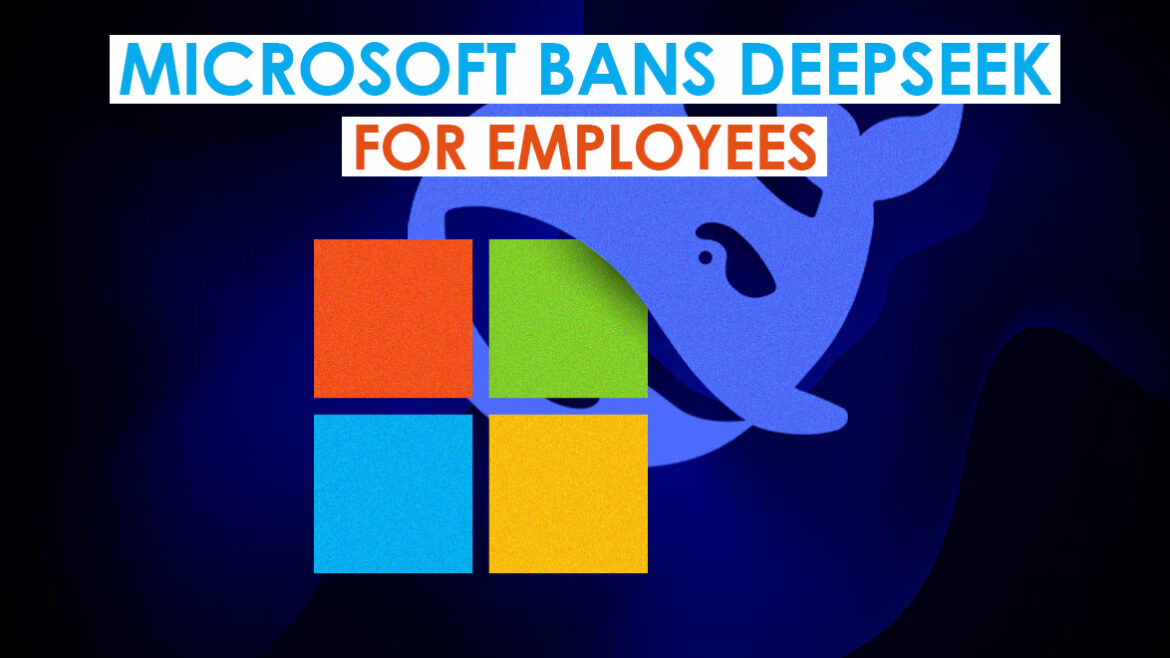
In a decisive move, Microsoft has officially banned its employees from using the Chinese AI app DeepSeek, citing serious concerns over data security and potential propaganda threats. This announcement came directly from Microsoft Vice Chairman Brad Smith during a recent testimony before the US Senate.

Why Did Microsoft Ban DeepSeek?

The core of Microsoft’s decision revolves around data security risks and geopolitical concerns. According to Brad Smith, DeepSeek stores user data on servers based in China, which exposes sensitive information to Chinese intelligence laws. Additionally, Smith warned that misinformation could be embedded within the app’s AI-generated content, making it a potential tool for propaganda.

Moreover, Microsoft confirmed that DeepSeek will not be listed on its official app store, further distancing itself from the Chinese AI platform.

A Strategic Shift in Microsoft’s AI and Cloud Policy

Interestingly, while Microsoft previously hosted DeepSeek’s open-source R1 AI model on its Azure platform, Smith assured that it underwent “rigorous red teaming” processes to filter out harmful content. However, this latest move signals a broader shift in Microsoft’s approach to AI governance and data sovereignty.

The company’s Azure cloud division, now responsible for 30% of its overall revenue, is positioning itself as a secure, regulation-compliant alternative for enterprise clients wary of foreign data exposure.

Geopolitical Tensions Reshape Cloud Infrastructure Strategy

In parallel with this ban, Microsoft has reportedly canceled hundreds of megawatts in US data center leases. Analysts suggest this reflects a pivot toward more agile, localized, and regionally compliant infrastructure solutions, allowing the tech giant to better navigate complex regulatory landscapes.

While these developments introduce short-term risks, particularly around infrastructure expansion, Microsoft’s impressive 15% stock gain in 2025 underscores market confidence in its long-term AI and cloud strategy.

Conclusion: A Bold Move in an Increasingly Complex AI Landscape

Microsoft’s decision to block DeepSeek underscores the growing importance of data security, AI ethics, and geopolitical strategy in today’s digital economy. As global tensions over AI platforms continue to rise, this move positions Microsoft as a leader in responsible AI governance and enterprise cloud security.

For tech enthusiasts, investors, and enterprise clients alike, this is a clear signal: data privacy and regional compliance will shape the future of AI infrastructure.

Pakistan’s IT Exports Soar to Record $342 Million in March 2025

Pakistan’s IT Export Boom Record $342 Million Achieved in 2025

Pakistan’s IT Export Boom Record $342 Million Achieved in 2025 800 480 D. I. Khan New City

Pakistan’s IT exports boomed to $342 million, setting a new record. In March 2025, the country’s information technology (IT) exports surged to an all-time high of $342 million, marking a 12% increase both year-on-year and month-on-month. This remarkable milestone highlights the sustained momentum driving the industry forward for the 18th consecutive month since October 2023.

According to Topline Securities, this performance not only exceeds expectations but also surpasses the 12-month average of $311 million. Clearly, the sector is showing robust and consistent growth.

What’s Fueling the Surge?

Several key factors are contributing to this exceptional rise in IT exports:

  • Expanded Global Client Base: Pakistani tech firms are rapidly gaining traction in the Gulf Cooperation Council (GCC) region, as well as North America and Europe, allowing them to tap into high-value markets.

  • Favorable SBP Policies: The State Bank of Pakistan (SBP) increased the permissible retention limit in Exporters’ Specialized Foreign Currency Accounts from 35% to 50%, enabling firms to reinvest more efficiently.

  • Equity Investment Abroad (EIA): The introduction of the EIA category empowers IT companies to acquire stakes in foreign ventures using up to 50% of their foreign currency proceeds—boosting both confidence and international presence.

  • Stable Rupee Performance: The relatively stable exchange rate has further encouraged exporters to repatriate a larger share of their profits, strengthening Pakistan’s financial outlook.

  • Global Presence: Moreover, participation in international tech events like LEAP 2025 in Saudi Arabia and Web Summit Qatar 2025 has amplified Pakistani innovation on a global platform.

Key Stats to Note:

  • March 2025 IT export earnings: $342 million

  • Total IT exports for 9MFY25: $2.8 billion (24% YoY increase)

  • Net IT exports (exports minus imports): $311 million

  • Daily export proceeds in March: $18.0 million (up from $16.1M in February)

  • Specialized FCY accounts: 62% of IT firms maintain one

What’s Next for Pakistan’s Tech Industry?

Looking ahead, industry analysts remain optimistic. They project a continued growth trajectory of 10–15% for FY25, with total IT exports potentially reaching between $3.5 to $3.7 billion by year-end.

Additionally, under the government’s ambitious ‘Uraan Pakistan’ strategy, the long-term objective is to achieve $10 billion in IT exports by FY29. This target, though challenging, is within reach if the current compound annual growth rate (CAGR) of 28% is sustained.

Conclusion:

Ultimately, the record-breaking performance in March 2025 demonstrates that Pakistan’s digital economy is rapidly evolving. Backed by forward-looking policies, a skilled workforce, and an expanding global footprint, the country is on a clear path to becoming a top-tier global IT exporter. As the world watches, Pakistan’s tech industry is proving it’s ready for the spotlight.

China’s AI Breakthrough DeepSeek Surpasses ChatGPT in 7 days

China’s AI Breakthrough DeepSeek Surpasses ChatGPT in 7 days

China’s AI Breakthrough DeepSeek Surpasses ChatGPT in 7 days 960 540 D. I. Khan New City

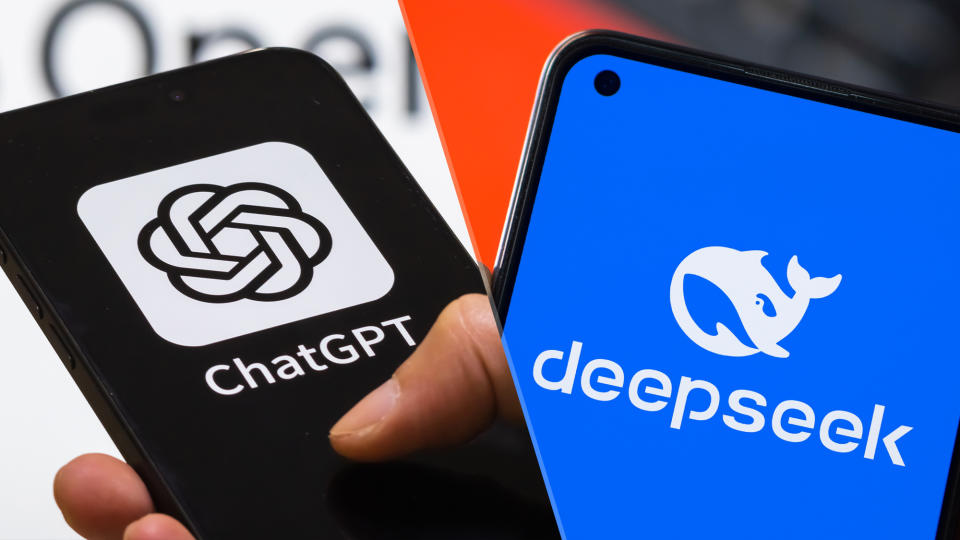
China’s AI industry has made a groundbreaking advancement with the launch of DeepSeek AI, a model that has outpaced ChatGPT in just seven days. Developed at a significantly lower cost, DeepSeek AI’s rapid success is shaking up the global AI landscape and challenging tech giants like Nvidia and OpenAI.

What Sets DeepSeek AI Apart?

DeepSeek AI stands out for its cost-effective development, utilizing fewer high-end computing chips while still delivering top-tier performance. Unlike models that rely on expensive AI hardware, DeepSeek demonstrates that innovation and efficiency can go hand in hand. This breakthrough has placed immense pressure on companies dependent on premium AI chips, signaling a major shift in the industry.

Impact on the Global AI Industry

The sudden rise of DeepSeek AI has led to significant consequences in the tech world:

  • Nvidia’s stock drop:

    The success of DeepSeek AI caused a $600 billion decline in Nvidia’s stock value, emphasizing the disruptive potential of this new AI model.

  • China’s push for tech independence:

    With U.S. restrictions on advanced semiconductor chips, China is striving for self-sufficiency in AI development. DeepSeek AI’s rapid success underscores the nation’s ability to innovate despite global challenges.

  • Increased competition:

    OpenAI and other leading AI developers now face stiff competition from China, raising the stakes in the AI arms race.

The Vision Behind DeepSeek AI

DeepSeek AI was founded by Liang Wenfeng, a visionary who aims to create original, cutting-edge AI models rather than simply replicating existing ones. His mission is to push the boundaries of artificial intelligence and position China at the forefront of the global AI industry.

Challenges and Concerns

While DeepSeek AI’s rise is impressive, it also raises some concerns:

  • Censorship & Data Privacy:

    Given China’s strict regulations on internet content and user data, many experts question how DeepSeek AI will handle sensitive topics and ensure privacy protection.

  • Long-term reliability:

    As a relatively new AI model, DeepSeek AI must prove its scalability, accuracy, and security over time.

Conclusion

DeepSeek AI’s rapid ascent marks a pivotal moment in the AI industry, proving that new players can challenge tech giants in record time. As China continues to innovate, the global AI landscape is set for a significant transformation, with DeepSeek AI leading the charge.

X
Welcome to D. I. Khan New City