[mwai_chatbot id="default"]

#TechInPakistan

Pakistan’s First Driverless Car Marks a New Era in AI Innovation

Pakistan’s First Driverless Car Marks a New Era in AI Innovation

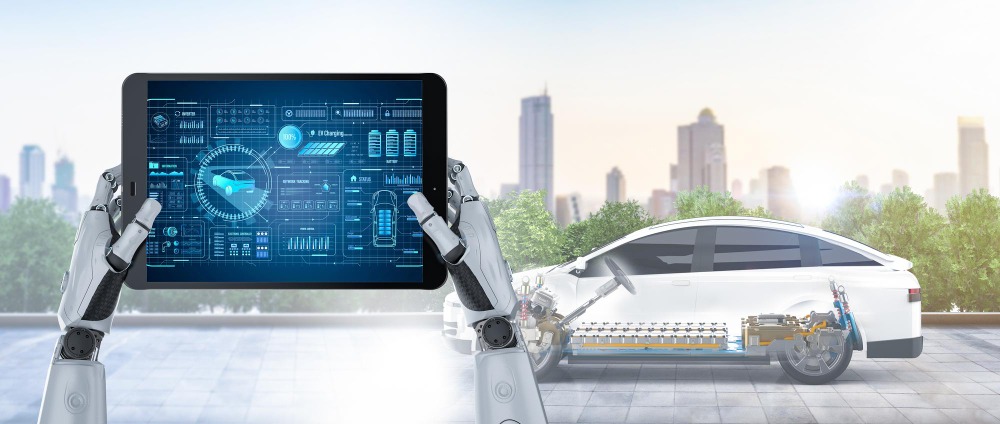
Pakistan’s First Driverless Car Marks a New Era in AI Innovation 1000 424 D. I. Khan New City

Pakistan has taken a major leap toward the future of mobility. Engineers at NED University of Engineering and Technology have successfully conducted the test drive of the country’s first AI-powered driverless car, setting a groundbreaking milestone in Pakistan’s technology and automotive sectors.

During the trial run, the autonomous vehicle moved smoothly across the NED campus roads, surprising students, visitors, and faculty with its ability to operate without human control.


A Year of Research, Engineering & AI Development

The project was developed at the National Centre for Artificial Intelligence (NCAI) within NED University’s Department of Computer and Information Sciences. The engineering team spent a full year transforming a China-imported electric vehicle into a fully autonomous system.

To convert the car into a driverless vehicle, developers integrated:

  • Artificial Intelligence (AI)
  • Advanced robotics
  • Mapping and localization tools
  • Computer vision
  • Radar sensors
  • AI-driven algorithms

This combination enabled the vehicle to navigate, recognize objects, and respond to its surroundings.


Steering Control, Object Detection & Autonomous Navigation

According to Dr. Muhammad Khurram, Director of the National Centre for Artificial Intelligence and the project lead, the car has now reached a mature stage of testing after extensive development cycles.

The system currently includes:

  • AI steering control
  • Radar and computer-vision enhancements
  • Object and obstacle detection
  • Lane recognition
  • Speed-limit detection
  • Traffic signal identification

Additionally, the car maintains an internal safety speed of 15–20 km/h, making it ideal for controlled testing on university grounds. It can also turn autonomously and judge incoming traffic.

Team member Inzimam Khan highlighted that this vehicle is uniquely designed to handle Pakistan’s challenging road conditions, including uneven surfaces, unexpected obstacles, and irregular traffic patterns. Its high-resolution sensors and AI-powered perception systems give it an edge over many global prototypes.


A Project That Spans Leadership and Vision

The driverless car project began under the leadership of former Vice Chancellor Prof. Dr. Sarosh Hashmat Lodhi and has seen major progress under the current Vice Chancellor Prof. Dr. Tufail Ahmed.

Their combined support reflects NED University’s continued commitment to innovation, research, and technological advancement.


A Major Step Toward Pakistan’s Autonomous Future

The successful test of this AI-powered driverless car is more than just a technological achievement — it represents Pakistan’s growing capabilities in:

  • Autonomous vehicle systems
  • Artificial intelligence research
  • Robotics and automation
  • Smart mobility solutions

As engineers continue to refine object detection, traffic interpretation, and full autonomy systems, Pakistan is moving closer to joining the global race for intelligent transportation and self-driving innovation.


Starlink Set to Launch in Pakistan by End of 2025

Starlink Set to Launch in Pakistan by End of 2025

Starlink Set to Launch in Pakistan by End of 2025 680 480 D. I. Khan New City

In a major step toward digital transformation, Federal Minister for Information Technology and Telecommunication, Shaza Fatima Khawaja, announced that Starlink’s satellite internet services are expected to be operational in Pakistan by November or December 2025. This marks a turning point for broadband access in remote and underserved regions of the country.

The announcement came during a briefing at the National Assembly Standing Committee on IT. It was revealed that Starlink — a subsidiary of SpaceX, owned by tech visionary Elon Musk — has already been issued a temporary No Objection Certificate (NOC) by the Pakistan Space Activities Regulatory Board. Consequently, this permits the company to begin groundwork for launching operations in the region.

What is Starlink and Why is it a Game-Changer for Pakistan?

Starlink provides high-speed, low-latency internet through a network of Low Earth Orbit (LEO) satellites. As a result, it’s particularly beneficial for countries like Pakistan, where rugged terrain and isolated communities often limit traditional broadband infrastructure.

With this development, even remote mountainous villages or desert communities could soon enjoy seamless internet access, thereby bridging Pakistan’s persistent digital divide.

Regulatory Progress and Next Steps

Although Starlink has not yet received a full operating license, officials confirmed that licensing arrangements are nearing completion. In fact, according to Pakistan Telecommunication Authority (PTA) Chairman Major General (retired) Hafeezur Rehman, a consultant has already been hired to assist in finalizing the regulatory framework for satellite-based internet services.

Once this framework is in place, Starlink will reapply for full operational clearance, ultimately paving the way for its commercial launch in Pakistan.

Competition on the Horizon: More Satellite ISPs Eye Pakistan

Interestingly, Starlink isn’t the only player with plans for Pakistan’s growing tech market. Minister Shaza Fatima Khawaja also disclosed that a Chinese satellite internet company has submitted an application to operate in the country. However, the name of the firm remains undisclosed.

This growing international interest further highlights Pakistan’s potential as a regional hub for space-based connectivity services, especially as demand for reliable, high-speed internet continues to rise.

What Starlink Means for Pakistan’s Future

The arrival of Starlink could significantly:

  • Improve internet connectivity in rural and underserved areas

  • Boost digital education, e-healthcare, and e-commerce in remote regions

  • Support the government’s Digital Pakistan vision

  • Open opportunities for telecom sector innovation and healthy competition

Conclusion

With Starlink’s commercial launch now on the horizon, Pakistan is gearing up for a digital revolution powered by next-generation satellite internet. As regulatory processes near completion and infrastructure installation begins, Pakistanis can look forward to faster, more reliable, and universally accessible internet — from bustling cities to the most isolated corners of the nation.

Stay tuned as Pakistan prepares to join the global Starlink network and reshape its digital destiny.

Google Wallet Launches in Pakistan A Step Forward for Digital Payments

Google Wallet Launches in Pakistan A Step Forward for Digital Payments

Google Wallet Launches in Pakistan A Step Forward for Digital Payments 1280 720 D. I. Khan New City

In a game-changing move for Pakistan’s digital economy, Google Wallet has officially launched in the country, signaling a major leap forward in mobile payments. The news sparked buzz across the fintech community, especially on LinkedIn, with experts and tech enthusiasts hailing the development as a turning point for digital financial services in Pakistan.

But what does this actually mean for users, merchants, and the broader payments ecosystem?

What is Google Wallet?

Google Wallet is a digital payment solution that allows users to securely store debit and credit cards on their Android phones. Once linked, users can make tap-to-pay transactions at NFC-enabled point-of-sale (POS) terminals. The app eliminates the need to carry physical wallets, offering a seamless and convenient checkout experience.

However, as of now, the service is limited to Android users and only supports payment cards—no bank transfers or mobile wallet top-ups yet.

Why the Hype?

Google’s entry into the Pakistani fintech market is significant for several reasons:

  • Pakistan was among the largest countries without access to Google Wallet.
  • It reflects the growing maturity and global relevance of Pakistan’s digital economy.
  • It builds trust in mobile payments by leveraging Google’s brand credibility.
  • It could drive adoption of Raast P2M and scan-to-pay technologies.

How Google Wallet Could Drive Change

According to Saad Niazi, CEO of Keenu, the launch will likely accelerate behavioral change toward mobile merchant payments in Pakistan. Much like Apple Pay did in Saudi Arabia and the UAE, Google Wallet’s launch could boost transaction volumes and user trust in tap-to-pay technology.

Furthermore, the timing aligns with Pakistan’s broader shift to digital. The Raast P2M system, launched in late 2023, has already onboarded over 700,000 merchants. However, adoption is still slow—with only 0.9 million transactions worth Rs2.9 billion processed between September and December 2024. A user-friendly interface like Google Wallet could be the push needed to normalize such services.

Limitations of Google Wallet in Pakistan

While promising, there are notable limitations:

  1. Card-only functionality: Google Wallet doesn’t support mobile wallet or bank account integrations yet. With just 56.4 million payment cards in circulation, its current reach is limited compared to apps like JazzCash (64 million users) and Easypaisa (21 million users).
  2. NFC Compatibility: The service relies on NFC-enabled phones, which are relatively rare in Pakistan. Many budget smartphones lack NFC functionality, a deliberate move by assemblers to reduce costs.
  3. Limited device coverage: Without widespread NFC support, tap-to-pay adoption could face short-term roadblocks.

Despite these hurdles, the long-term potential remains strong. NFC costs are declining, and increased demand could push local manufacturers to include this feature in more devices. Additionally, POS terminals across Pakistan are rapidly upgrading to support tap-and-pay payments.

Industry Reactions and Future Outlook

Industry leaders are optimistic. Aamir Aftab, Chief Product Officer at JazzCash, sees Google Wallet as an opportunity to encourage card adoption in a mobile-first market. By integrating with Google Wallet, platforms like JazzCash can offer hybrid experiences—combining card and wallet transactions under one umbrella.

Karim Jindani, CEO of Paysys Labs, offers a broader perspective: for Pakistan to truly revolutionize payments, it must look beyond cards. Drawing from global examples like Brazil’s Pix and India’s UPI, he suggests Pakistan should invest in scalable peer-to-peer (P2P) and peer-to-merchant (P2M) infrastructure, backed by thoughtful policy and innovation.

Conclusion

Google Wallet’s arrival in Pakistan is more than just a tech upgrade—it’s a sign that the global fintech world sees potential in the country’s rapidly growing digital ecosystem. While the service currently faces some limitations, it has the potential to reshape consumer habits, accelerate Raast P2M adoption, and create a more seamless digital payment experience.

The key will be how effectively local businesses, policymakers, and fintechs can build on this momentum to create an inclusive and scalable payment infrastructure for all.

X
Welcome to D. I. Khan New City