
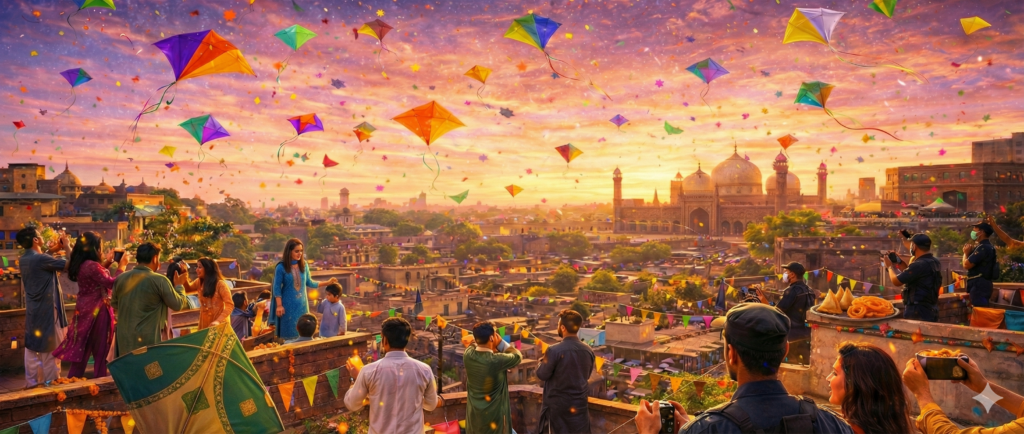
Basant marks the arrival of spring and represents renewal, hope, and fresh beginnings. The word Basant comes from Sanskrit and Hindi and connects deeply with Punjabi culture. Yellow, the colour of life and prosperity, defines the spirit of this festival.
As winter ends, nature awakens. The weather turns pleasant. People feel lighter and step outside to celebrate. In earlier times, kite flying expressed this joy most beautifully. Rooftops filled with laughter. Colourful kites soared across the sky. Communities came together.
Basant was never just an event. It shaped everyday life.
When Basant Defined Culture and Community
People welcomed spring with open hearts. Men wore yellow turbans. Women wrapped yellow shawls around themselves. Mustard fields glowed across the land and signaled the season’s arrival.
Families gathered at home. Traditional dishes filled dining tables. Folk songs echoed through streets and rooftops. The sky turned into a canvas of colour. Birds chirped. Flowers bloomed. Nature and humans celebrated together.
Basant blended joy, faith, art, and culture into one shared experience.
How Joy Turned Into Concern
Over time, unsafe practices entered the festival. People replaced cotton string with chemical-coated and metallic string. These changes caused serious injuries and tragic losses.
Fear replaced celebration. Joyful sounds faded. Authorities eventually banned the festival to protect lives.
Even then, Basant never left people’s hearts.
The Responsible Return of Basant
Punjab Chief Minister Maryam Nawaz Sharif lifted the ban and introduced strict regulations under the Punjab Kite Flying Control Act. The government focused on reviving Basant while ensuring public safety.
The new SOPs clearly state:
- Authorities ban chemical and metallic strings
- Kite flyers must use approved cotton string
- Officials prohibit oversized kites
- Motorcyclists must install protective safety rods
These rules encourage celebration with responsibility.
Lahore: The Living Spirit of Basant
Lahore thrives on culture and tradition. The city lives beyond bricks and roads. As the Punjabi saying goes, “Jis ne Lahore nahi vekhya, oh jamya hi nahi.”
History highlights Lahore’s strong bond with Basant. Mughal rulers celebrated it under the principle of Sulh-i-Kul, which promoted universal peace. Maharaja Ranjit Singh later embraced the festival as a symbol of harmony. The famous White Basant earned international recognition and admiration.
A New Chapter Begins
This year, Basant returned with renewed energy. The three-day festival began on 5th February. Punjab’s Information Minister Azma Bukhari inaugurated the celebrations by flying a kite.
Kites now fill Lahore’s sky. Rooftops buzz with excitement. Streets attract crowds of spectators. Women add colour to the festival with traditional dresses, mehndi-decorated hands, and festive food. Many actively take part in kite flying.
Despite high prices and limited availability, enthusiasm remains strong.
Chief Minister Maryam Nawaz visited Liberty Chowk to review arrangements. She urged motorcyclists to follow safety guidelines. Citizens welcomed these steps. Authorities also launched special bus services to help people move easily across the city.
Learning to Celebrate with Care
Educational institutions, parents, and social organizations played an important role this year. They taught children the history of Basant and safe ways to celebrate it. This shared responsibility reflects social growth and awareness.
Such balance protects culture and lives.
A Prayer for the Future
May Basant continue to spread joy and colour.
May safety guide every celebration.
And may future generations enjoy this tradition without fear.
